
02 - More In-Depth
The perceived threat
The root cause of insomnia is a perceived threat of not sleeping aka being awake at night. This perceived threat is the very thing that keeps us awake. The reason it keeps us awake is because the brains #1 job is to keep us safe, so if the brain is detecting a threat, whether that be perceived or real, it will keep us awake instead of allowing us to go into our most vulnerable state which is sleep.
The idea that you can remotely find not sleeping/being awake at night as a threat may sound like complete horsesh*t, but I ask you to really look inside yourself and see if you can recognise the fact that your mind is seeing not sleeping as a threat. Do you find yourself getting anxious when the sun goes down? Do you find yourself putting sleep efforts in place to “make sleep happen” such as “sleep” meds or supplements? Are you limiting your life in relation to sleep? If so, these things are happening because you have a fear of not sleeping.
Also think about this, anything can be feared, one example that many people laugh at is a fear of clowns. Many of us don’t have the fear as we know that clowns are usually not threatening, but some of us do have the fear and this fear (most of the time) is perceived. Another example can be spiders, this is one that many of us do have, yet we know many spiders are not to be feared, yet we still do fear them. Both are an example of a perceived threat. Now let’s add a real fear into the mix, a fear of wolves, through our evolution our brains know wolves are to be feared, they are usually a real threat, if you heard a wolf in the night, you would instantly be woken up, we know this as it’s common sense really. Our brain reacts the same to a real threat and a perceived threat, the brain literally sees them the same way.
Befriending wakefulness
The initial reason for the creation of this perceived threat does not matter, so if you do or do not know why this perceived threat has been conditioned into your mind, it doesn’t matter, the way to recondition the brain to no longer consider not sleeping/being awake as a threat is the same.
The way you recondition the brain to longer see not sleeping as a threat is to expose yourself to being awake at night and during the day with courage. Allow yourself to be awake at night, stop trying to escape being awake, embrace it and make it as comfortable as can be. Read a book, watch the tv, listen to some music, do anything to pass the time you’re awake at night then go back to bed/put your head back down when/if you feel ready to. Live your life as though you don’t have insomnia, go on that long-awaited trip, go on that date, go for that late night meal, don’t back out of that plan with friends because you didn’t sleep well. Over time this will tell both the conscious and sub-conscious parts of your mind that not sleeping is not a threat. This can be summed up as “experiential learning”, you experience the fear to let your mind learn that there is nothing to fear.
Now the idea of “befriending” wakefulness may imply you need to “like” being awake at night. You do not. You can hate it with all your heart. All you need to do is just have the courage to face the fear. Liking it or disliking it does not change the outcome, if anything having the courage to face what you both fear AND hate may make you an even stronger person. Fearing AND hating what you’re willing to face just says you have immense courage, and when you get to the other side of this, you will have the courage to do a lot more in your life. You will be more willing to do what you hate, you will be more willing to face any other fears you have in life. You will become a much stronger version of yourself mentally.
It must be real not artificial
Something I heard a few times in my insomnia coaching calls was that people would keep themselves awake at night to befriend wakefulness, they would make themselves face being awake at night. The issue here is that you are not facing the fear, only the wakefulness. Yes, the root cause is a fear of wakefulness, but befriending wakefulness is about facing the fear, not just the wakefulness itself. It can be little tricky to understand at first, but the TLDR is, be open to facing wakefulness at night when the fear is keeping you awake, not your own choice of staying awake.
Speedbumps
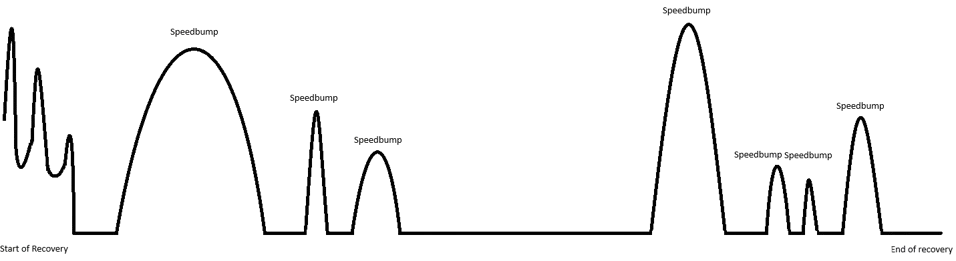
“Speedbumps” is a term we like to use to explain the time(s) your sleep reduces in quantity or even quality, you may find that you’re sleeping fine for some time after you have implemented the behavioural changes and understood the teachings on this site, then all of a sudden you’re sleeping badly again. Usually this isn’t due to you doing anything “wrong”, it’s usually just caused by the hyperarousal peaking it’s head up again, your brain is just detecting a perceived threat of wakefulness and is now trying to keep you safe but this will pass as long as you allow yourself to face the “threat” of wakefulness.
The great thing about speedbumps is that they’re an indication that you are getting out of the loop of insomnia, bad sleep is no longer your norm, bad sleep is now an “event” that stands out and what you can call speedbumps. They are in no way a sign on regression but are a sign of progression. They’re also a prime opportunity to further show your brain that you are safe when awake, follow the advice of befriending wakefulness to show your brain you are truly safe and over time the speedbumps will become less intense and even shorter, the more you accept these events the easier the journey gets. Also allow the speedbumps to take as long as they need, put no pressure on yourself to get through a speedbump quickly, this especially applies if you’re a long way into the journey of recovery, you may think “I’ve been in recovery for x long, so this speedbump won’t last long”, just allow it to take its course, it will end eventually.
Speedbumps are also a prime time for further learning about yourself, during or after a speedbump you can analyse if you’re still participating in any unhelpful safety behaviours, if the fear is still dictating how you live your life, if you’re still not fully open to being awake at night etc.
Example of a speedbump journey:
Emotional Fatigue
During the journey of my own insomnia, I realised that most of the fatigue I was feeling was emotional, I realised this as some days I would get less sleep and feel pretty good and other days I would get more sleep but still feel drained. I actually experienced this 2 days in a row, on one night I only got 2 hours of sleep and I felt pretty good (for 2 hours of sleep that is) then the next night I had a solid 6 hours and I felt terrible, this did catch me by surprise but it’s experiences like this that helped me become as recovered as I am today. This is why I would recommend you to work on your mindset, removing your focus from the bad and onto the good, instead of focusing on the fact you have insomnia maybe focus of the fact you can recover, focus on the fact that you will get to the other side a much stronger person mentally, focus more on the good in your life overall, practice gratitude any time you’re feeling down, a gratitude journal could be a good tool, writing things down drills this positive information into your mind even more than just thinking about it as you are both thinking about it, writing it and reading it.
The main components of the emotional fatigue
I would say the main component of emotional fatigue could be depression, people with insomnia have a much higher chance of developing depression as insomnia is affecting you negatively 24/7, so don’t even think about blaming yourself for being depressed, you are dealing with a horrendous condition and I would be surprised if you weren’t depressed in some way. Now I may have scared you a little here, you may now be thinking you have 2 “battles” to deal with, insomnia and depression, but when insomnia is the root cause of your depression, then it is only the insomnia you need to overcome.
Major anxiety can also be a component of the emotional fatigue, being in a constant state of anxiety will exhaust anyone. And just like depression, people with insomnia have a very high chance of developing it. Think about what the main driver of insomnia is, a fear of not sleeping/being awake, so when you are in a constant state of fear of this you are in a constant anxious state. Now again, the good news here is that when insomnia is the root cause of this anxiety, it is just the insomnia you need to overcome.
Being sedentary
Another component to emotional fatigue that I am still working on is being sedentary, when you are physically fatigued, anxious or depressed from the lack of sleep, it can make you sedentary, this can be mistaken for laziness and bring you down even more. The brain basically hates you being sedentary, it wants you moving or thinking, this is why it would be good to think of the phrase “Exercise the mind and Exercise the body” when you’re feeling down. Get moving whether that be a 10-minute walk or a full workout, get your brain working by simply reading something new or work on a whole new project. Whatever it is, be sure you’re doing something to exercise your mind or your body, you may find that this becomes a habit and the new norm for you, you may even get addicted to this is it can improve your life in every way.
Fear
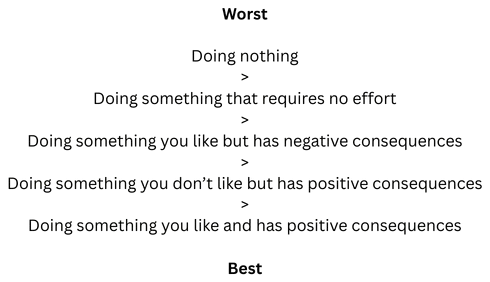
As previously explained, the root cause of insomnia is a perceived threat of not sleeping/being awake, this is the main fear that creates the loop of insomnia, but other fears can be developed once the root cause of insomnia is in place. You can start to fear; the chance of losing your job because you’re “too tired” to work well, going out late at night as it may stimulate you before bed, sleeping in a foreign place such as a hotel or even letting go of any sleep efforts such as supplements/medications for sleep etc. It is very usual for you to develop such fears as the lack of sleep, the anxiety, and the depression can truly make you feel limited in life. But once again, the good thing here is that once you start to recover from the fear of not sleeping, all these other fears can start to melt away.
Fear can be experienced in many ways, but all experiences of fear can be broken down as being a form of anxiety, and anxiety is usually experienced via thoughts and/or feelings. Examples of the feelings you can experience are heart palpitations, a lump in your throat aka globus sensation, a weight on your chest, sickness in your stomach, shaking aggressively etc. Examples of thoughts can be worrying about not sleeping tonight, worrying you will never recover, thinking you will never be able to work at your full potential etc. These are prime examples but there are many types of thoughts and feelings you can experience. The best thing here is to understand there is nothing to worry about, yes you may feel like there is something medically wrong. I for example had a lump feeling in my throat for over a week straight, not a single minute went by were this lump went away, no matter how much i swallowed, did throat stretches or TRIED to ignore this feeling, it just wouldn’t go away. By me trying to escape this feeling of anxiety I was telling my brain it was something to fear, this was creating a “fear of fear” which is explained further in the next area.
Fear of Fear
A fear of fear is as it sounds, you start to fear the experience of a fear. As we know, fear can be experienced from anxiety and anxiety can cause many uncomfortable thoughts and feelings. By trying to escape the experiences of fear, we start to condition the brain into thinking that the experiences are a threat, remember when you continually try to escape anything, you are telling the brain that it is a threat therefore something to fear. Simply recognising that the thoughts/feelings of fear are not threatening to us, we can start to condition the brain into recognising that they are not a threat. Overcoming the fear of fear is the same as befriending wakefulness, allow the fear to sit there and paradoxically it will eventually melt away.
Conscious vs Sub-conscious fear
Conscious fear is a surface level fear you experience when feelings such as uncomfortable thoughts show, let’s say the sun has gone down and you have the thought of “will I sleep tonight?”, this is a surface level fear that has popped up in your conscious and is just a safety signal from the brain. This safety signal is sent from the brain so you will go into problem solving mode and try to figure out how to fix the “problem” you are about to experience, this “problem” being if you don’t sleep well or at all. As we know, thoughts are just thoughts, these signals don’t always reflect reality and you can just allow that thought to sit in your mind, then as your mind learns that safety signal is no longer needed as it learns you are safe, these types of thoughts will become less prevalent as time and experience with what is being feared happens more and more.
Sub-conscious fear is an ingrained fear, the more “real” fear. This fear is where the root cause of your insomnia is stored. This type of fear is what can cause every type of fear response you experience, this can include the thoughts, the feelings, the fight or flight, the adrenaline rush etc. It is harder to tap into the sub conscious as this area of your mind is where your entire bodies functioning system is controlled, this can include breathing, digestion and of course the ingrained fears, it is why it takes so long and can be difficult to “tap into”. Luckily for us, the sub conscious can also learn that what it fears isn’t really a fear and this is where we can refer back to the conscious fear, as you experience the conscious fear relating to sleep or anything at all, the more your conscious learns what you fear isn’t actually dangerous, this information slowly trickles down into your sub conscious.
Overcoming fear
Just like practicing befriending wakefulness, the best way to overcome a fear is to experience it, allow it to be there. When you’re getting these anxious feelings or anxious thoughts, allow them to be there, allow them to sit wherever you are experiencing them. Have a weight on your chest and find it hard to breathe? Have a lump in your throat and feel like you’re going to choke? Have a ton of thoughts that are making your mind feel fuzzy? Tell yourself it’s just anxiety, this may not remove the feeling but it will remind you that the feeling is not dangerous, you are not in danger, your brain is just sending these safety signals to tell you it’s in a state of fear but the thoughts/feelings will not harm you, the brain is not against you it just trying to keep you safe.
The Sleep Cycle
Sleep runs in roughly 90-minute cycles and includes 4 stages: Deep sleep, REM sleep, Light Sleep and wakefulness.
Most of our deep sleep happens near the beginning of the time we have gone to sleep, this is because our sleep drive is strongest at this point.
Most of our REM sleep happens in the second half of the time we have gone to sleep, this type of sleep is lighter than deep but not quite wakefulness, this is why we can remember our dreams on regular occasions.
Wakefulness is a part of the sleep cycle, and this is by design as this allows our brain to “check in” to see if we’re safe in the middle of the night. This wakefulness stage explains perfectly as to why maintenance and early awakening insomnia is possible.
I have chosen to only briefly explain the sleep cycle here as it isn’t particularly important for insomnia recovery, but I did want to highlight the wakefulness stage as this gives a perfect explanation as to how maintenance and to an extend early awakenings are possible.
If you are really curious about the sleep cycles I would refer to https://www.sleepfoundation.org/stages-of-sleep/nrem-sleep, but again this information is of little importance for insomnia recovery.
Self-kindness
Self-kindness is an incredibly important concept to have in place, it’s what can make the journey of recovery so much easier. The best way to practice self-kindness is to speak to yourself like you would to a family member if they were dealing with insomnia. You wouldn’t give them a hard time if they didn’t understand all the concepts, if they were having a hard time at dropping unhelpful behaviours, if they were struggling with daily life. You would comfort them and let them know they have immense courage for going face to face with the recovery process, you would let them know that the concepts will click in their mind over time with the experience, you would tell them to take it easy in the hardest of times and there’s no need to push themselves all the time. Do not be hard on yourself as all you’re doing is making the process more difficult, understand you are going through something that cannot be directly controlled and the recovery will take as long as it needs to and your understanding will also expand as slow or as fast as it needs to.
Sleeping Arrangements
Couch
You may find that you fall asleep easily on the couch, this is because the pressure to sleep on the couch is lower than the pressure to sleep in your bed, the pressure may even be non-existent as this may not be your usual area to sleep. With this lowered pressure, there is less grasp to control, less fear that you won’t sleep since you don’t expect to sleep. This can funnily enough eventually make sleeping on the couch a sleep effort if someone then believes the only way they can sleep is by sleeping on the couch, but now this person has added the same pressure to sleep on the couch as they do to sleep in their bed, this is when sleeping on the couch “no longer works”. The best course of action here is to not make the couch your main area to sleep because “it works”, simply just understand that the lack of sleep pressure is the reason why you’re able to fall asleep easily on the couch, stick with your usual sleeping arrangement of sleeping in your bed instead of trying to look for the “fix”.
Guest Bedroom
You may find that sleeping in the guest bedroom is easier than sleeping in your usual bedroom, this one can be a little tricky since reasons for moving to the guest bedroom can be individual, however one reason I have seen quite a lot is to remove the chance of sleep disturbances, a partner may snore or move about in their sleep and you are worried about this disturbing your sleep. This can be valid at times, maybe your partner really does disturb your sleep and a conversation may be in order, but think about if your partner disturbed your sleep before insomnia, were you worried they would wake you or keep you awake at night? if the potential disturbances were not an issue before insomnia, it may just be the fear of being awake at night that is driving you to the guest bedroom. The best course of action here is to slowly return to your bed, slowly face the chance of a sleep disturbance, allow your brain to know that the chance of sleep disturbances is not to be feared, face the fear of the chance that you will be awake at night.
Hotel
Hotels can be an Insomniacs biggest enemy, you’re expected to sleep in a foreign bed, in a foreign building, in a foreign location. It’s only natural that your fear of not sleeping rises, you have basically no control over your environment in a hotel. Your brain will also be on high alert as it has no idea if this foreign environment is safe, so your hyper arousal can be heightened. The best course of action here is to go ahead with sleeping in a hotel and accept that you may not get the best quality sleep or even sleep at all, face the fear of being in a foreign environment at night and let the brain learn you are once again safe at night.